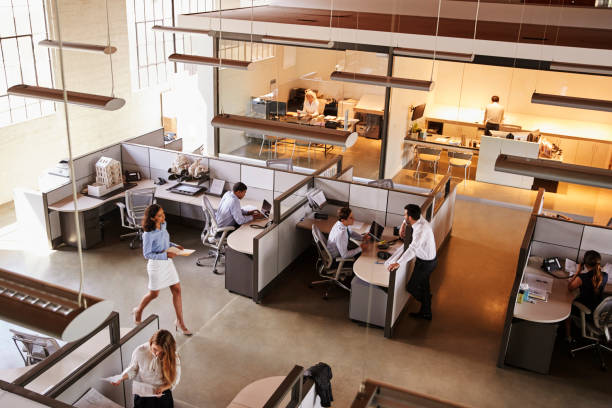
Open floor plans dominated office design for years, but many businesses are rediscovering the value of cubicles as a way to give employees focused, private space without walling off the entire office. Cubicles have evolved significantly from the beige boxes people remember, and modern versions balance privacy with a design that still feels open and collaborative.
Businesses shopping for office cubicles for sale today have far more flexibility than in years past. Modular systems can be reconfigured as teams grow or shrink, panel heights can be adjusted to control sightlines, and finishes now range from traditional fabric to sleek modern materials that fit almost any office aesthetic.
Privacy remains one of the strongest arguments for cubicles, especially in industries where employees handle sensitive information or need quiet space for concentrated work. Following recognized guidance, such as federal recommendations for workstation setup, helps ensure that desk height, monitor placement, and chair support are all considered from the start rather than adjusted later as an afterthought.
Health and comfort should also factor into any cubicle purchase, since employees spend hours each day inside these spaces. A completely open floor plan sounds appealing in theory, but in practice it often leads to constant distraction, which hurts productivity more than people initially expect when they first move away from private offices. Getting these fundamentals right during the initial cubicle selection process saves headaches down the road.
Collaboration does not have to disappear just because a team uses cubicles. Lower panel heights, shared work surfaces between adjacent stations, and strategically placed open areas allow teams to maintain the benefits of cubicle privacy while still supporting spontaneous conversation and teamwork when it is actually needed.
Space planning plays a major role in how well cubicles function within an office. Poorly arranged workstations create bottlenecks, awkward walking paths, and wasted square footage, while a well-designed layout maximizes both privacy and efficient use of available space. Working with a furniture provider who understands space planning, not just individual product sales, makes an enormous difference in the final result.
Budget flexibility is another advantage cubicles offer over building out permanent private offices. Cubicle systems can be purchased incrementally, reconfigured as needs change, and moved relatively easily compared to fixed walls, which makes them a practical choice for businesses that expect to grow or shift their layout over time.
For deeper guidance on setting up workstations that genuinely support employee well-being, a trusted medical resource on posture and ergonomics offers helpful context on chair height, monitor positioning, and general workstation setup that pairs well with any cubicle purchase. Choosing the right cubicle system ultimately comes down to understanding how your team actually works day to day, then selecting configurations that support both individual focus and the collaboration that keeps projects moving forward.