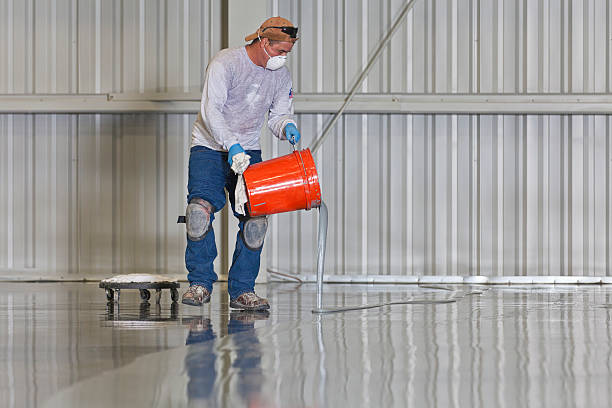
Removing an old floor coating is only the first step. Once the surface is bare, the concrete underneath tells the real story. That is why experienced epoxy floor companies do not rush straight into applying a new system.
Old coatings can hide cracks, weak concrete, moisture problems, oil contamination, patchwork, and areas where previous materials never bonded correctly. A proper inspection after removal helps determine what preparation the floor needs before new epoxy flooring goes down.
The Concrete Surface Has to Be Checked Closely
After the old coating is removed, contractors look at the concrete itself. They are checking for spalling, pitting, soft spots, previous repairs, exposed aggregate, and surface damage.
Some slabs look fine at first glance but have small problem areas that need attention. A crack hidden under paint may need to be opened and repaired. A loose patch may have to come out. If the surface is dusty or weak, that material may need to be mechanically removed before recoating.
Homeowners searching for epoxy garage floor near me often focus on color, flakes, or finish. Those choices matter, but the condition of the concrete underneath has a much bigger effect on whether the finished floor bonds well.
Old Adhesive and Contamination Can Still Be Present
Even after a coating comes off, residue can remain in pores and low spots. Oil, grease, tire residue, adhesive, paint, and other contaminants can interfere with adhesion.
This is one reason mechanical grinding is commonly used during surface preparation. Grinding removes weak material, opens the concrete surface, and helps create a more consistent profile.
Garages and workshops often have contamination where vehicles, equipment, or chemicals were stored. Commercial floors can have similar issues in service bays and work zones. Before commercial epoxy flooring is installed, those areas need to be evaluated instead of simply covered.
Moisture Problems Need Attention Before Recoating
Moisture may become easier to notice after an old coating is removed. Dark areas, discoloration, mineral deposits, or signs of previous blistering can point to moisture movement, although proper testing may still be needed.
Excess moisture in concrete can interfere with coating adhesion. In some cases, a previous coating may have failed because moisture pressure worked against it from below. That does not mean every damp-looking slab has the same problem, but it does mean the floor should be checked before another coating system is installed.
People comparing epoxy floors near me should ask how contractors evaluate slab conditions before installation. Preparation should be based on what the concrete actually needs.
Cracks, Joints, and Old Repairs Are Looked At Separately
Not every line in a concrete slab should be treated the same way. Shrinkage cracks, control joints, construction joints, and damaged edges can behave differently.
Contractors inspect cracks to see whether they appear stable, whether the edges are breaking down, and whether old filler is still bonded. Previous repairs matter too. Some patching materials can stay in place, while others may need to be removed and replaced.
A coating follows the condition of the substrate. If weak repair material is left underneath, new epoxy flooring can still fail over that spot even if the rest of the floor is sound.
The Surface Profile Has to Match the New Coating
Once defects and contamination are addressed, contractors look at surface texture. Concrete that is too smooth may not give a coating enough mechanical grip. Rough or damaged areas may need more preparation before a base coat can be applied evenly.
Concrete profiling is meant to create a clean, sound, properly textured surface that supports adhesion. The goal is not to make the bare slab look finished.
Anyone looking for epoxy flooring near me should expect surface preparation to be a major part of the job. The coating itself is only one part of the system.
Previous Coating Failure Can Leave Useful Clues
Old coating failures often explain what needs to change on the next installation. Peeling near tires may point to poor preparation or contamination. Blisters may suggest moisture or trapped air. Flaking around cracks may show movement or weak concrete below.
The pattern can be useful. Installers pay attention to where the coating came off easily, where it stayed tightly bonded, and what the exposed slab looks like in those areas.
In Pensacola, garages and commercial spaces may also deal with humidity, sand, vehicle traffic, and other everyday conditions that can be hard on floor coatings. Those conditions do not automatically cause failure, but they are part of the service environment contractors should consider.
A Better Installation Starts With the Bare Slab
Property owners who would rather have the concrete evaluated and prepared professionally can speak with an experienced local contractor. Elite Coastal Epoxy works with epoxy and polyaspartic flooring systems for residential and commercial spaces.
Removing the old coating is not the finish line. It is the point where the actual condition of the floor becomes visible. Good epoxy floor companies use that opportunity to check the slab, correct problems, and prepare the surface before the next coating goes down.