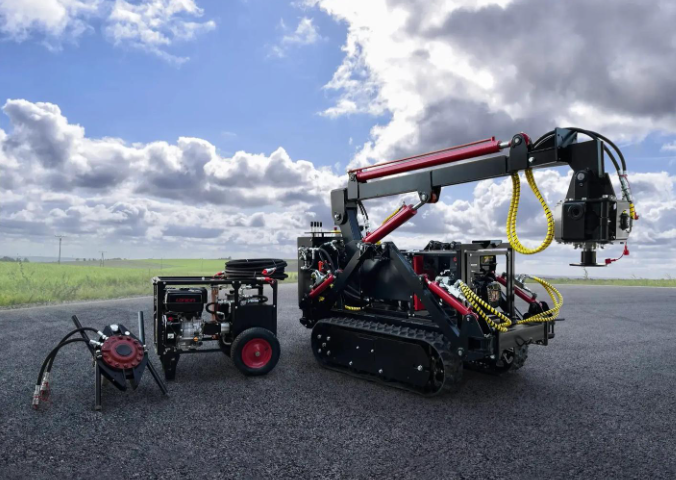
Foundation construction determines not only the structural reliability of a building but also the pace and organisation of subsequent work. Delays during the preparation of foundations can disrupt material deliveries, increase labour costs and leave other contractors waiting. The introduction of specialised hydraulic equipment has changed how construction companies approach these challenges. Equipment manufacturers such as iron-mechanics.com develop machinery that allows contractors to perform demanding foundation work without relying exclusively on large construction vehicles or extensive manual labour.
The advantages of mechanisation are particularly evident in the installation of helical piles and ground screws. Although these foundation elements differ in design and structural application, both require controlled rotation during installation. Maintaining consistent alignment and delivering sufficient torque become increasingly difficult when relying on manual methods, particularly on projects involving numerous foundation supports.
Moving beyond manual installation
Manual installation remains a practical option for certain lightweight structures and small domestic projects. However, its limitations become apparent as the dimensions of foundation elements increase or ground conditions become more demanding. Workers may encounter considerable resistance from dense soil, while uneven physical effort can affect installation consistency. Maintaining productivity throughout a working day is another challenge, especially when repetitive tasks cause physical fatigue.
Hydraulic equipment addresses many of these difficulties by transferring the physical demands of installation from workers to machinery. A hydraulic drive delivers rotational force that can be controlled according to the equipment’s capabilities and installation requirements. Operators can concentrate on positioning, alignment and monitoring rather than generating the force needed to penetrate the ground.
Mechanisation also improves the predictability of labour requirements. Contractors can allocate personnel more efficiently and reduce their dependence on large installation teams. This is particularly valuable for smaller businesses operating several construction projects simultaneously.
Greater control over foundation installation
The quality of a helical pile foundation depends on much more than the speed at which individual piles enter the ground. Installation depth, vertical alignment, soil conditions and the characteristics of the pile itself influence structural performance. Specialised machinery helps operators maintain better control over several of these variables, although it cannot compensate for inadequate engineering design or unsuitable ground conditions.
When selecting hydraulic installation equipment, contractors should consider several practical factors.
- Available torque in relation to anticipated ground resistance and pile specifications.
- Compatibility with different foundation elements and installation accessories.
- Equipment stability during operation on uneven or restricted sites.
- The accuracy and accessibility of operational controls.
- Transport requirements, maintenance costs and spare parts availability.
Installation torque may also provide useful information about the interaction between a helical pile and the surrounding soil. Under appropriate design methods, recorded torque can contribute to the assessment of pile capacity. However, these measurements must be interpreted using suitable engineering criteria rather than treated as independent proof of structural reliability.
Changing the economics of construction work
Labour represents a substantial proportion of foundation installation costs, but it is not the only expense affected by mechanisation. Transport arrangements, equipment hire, site preparation and scheduling all contribute to the financial performance of a construction project. Compact hydraulic machinery can help reduce some of these expenses by limiting the need for additional vehicles and simplifying mobilisation between sites.
For contractors handling frequent foundation installations, owning specialised equipment may offer greater flexibility than arranging machinery hire for every project. Equipment availability allows businesses to respond more quickly to new orders and unexpected changes in construction schedules. It can also reduce the financial consequences of delays caused by external equipment suppliers.
Nevertheless, purchasing machinery introduces maintenance obligations, depreciation and operator training costs. The economic benefits depend on workload, project characteristics and the frequency with which the equipment is used. Contractors considering an investment should assess realistic annual utilisation rather than base purchasing decisions solely on advertised installation speeds.
New opportunities for smaller construction companies
The development of compact installation machinery has expanded the range of projects that smaller contractors can undertake. Residential extensions, modular buildings, garden structures and commercial installations frequently involve restricted access or limited working space. Bringing conventional heavy machinery onto such sites may require additional preparation or the temporary removal of existing structures.
Compact equipment can make foundation installation more manageable while reducing disruption to surrounding property. Its suitability still depends on ground conditions, equipment dimensions and safe operating clearances, but greater mobility gives contractors more options when planning their work.
The wider significance of mechanisation lies in the ability to organise foundation construction around measurable technical requirements rather than the physical capacity of an installation team. Companies that combine suitable machinery with engineering knowledge, trained operators and effective maintenance practices are better positioned to deliver consistent work. For smaller contractors, that combination can support sustainable business growth without requiring a corresponding expansion of their workforce.