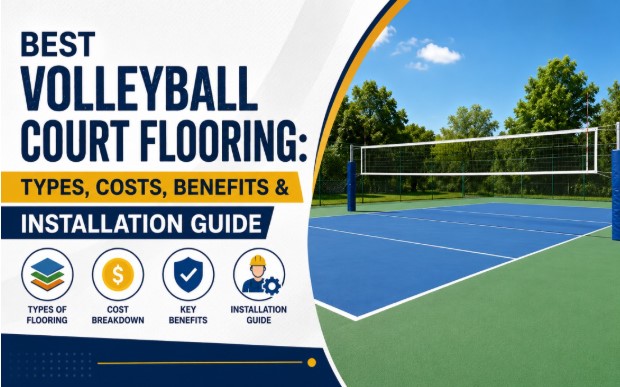
Volleyball is one of the most popular sports played in schools, colleges, sports clubs, residential communities, and professional training facilities. While the quality of gameplay depends on player skill, the performance, safety, and longevity of the court largely depend on selecting the Best Volleyball Court Flooring.
Whether you are planning a new sports facility or upgrading an existing court, choosing the right flooring system is a critical decision. From understanding the best volleyball court material to learning about court dimensions, construction methods, and installation costs, this guide covers everything you need to know.
Why Volleyball Court Flooring Matters
The playing surface directly affects ball bounce, player movement, safety, and maintenance requirements. Poor-quality flooring can lead to uneven gameplay, increased injuries, and frequent repairs.
High-quality volleyball court flooring offers:
- Superior grip and traction
- Consistent ball response
- Reduced player fatigue
- Enhanced shock absorption
- Better weather resistance
- Long-term durability
- Low maintenance requirements
For outdoor sports facilities, selecting the right outdoor volleyball court flooring material becomes even more important due to exposure to sunlight, rain, temperature changes, and heavy usage.
Volleyball Court Measurement: Standard Dimensions
Before starting construction, it is important to understand official volleyball court measurement standards.
Standard Volleyball Court Dimensions
| Specification | Measurement |
| Court Length | 18 meters |
| Court Width | 9 meters |
| Attack Line Distance | 3 meters from center line |
| Free Zone (Minimum) | 3 meters on all sides |
| Net Height (Men) | 2.43 meters |
| Net Height (Women) | 2.24 meters |
For professional tournaments, larger free zones are often recommended to provide adequate player movement and safety.
Proper dimensions are essential during the planning phase of the Best Volleyball Court Construction process.
Best Volleyball Court Material Options
Various flooring materials are available for volleyball courts. Each offers unique advantages depending on the location, budget, and level of play.
1. Acrylic Sports Flooring
Acrylic flooring is considered one of the best volleyball court materials for outdoor courts.
Benefits
- UV-resistant surface
- Anti-slip texture
- Excellent durability
- Low maintenance
- Multiple color options
- Cost-effective installation
Acrylic systems are commonly used in schools, universities, sports complexes, and community sports facilities.
2. Synthetic PU Flooring
Polyurethane flooring provides enhanced cushioning and player comfort.
Benefits
- Shock absorption
- Professional-grade performance
- Smooth playing surface
- Long service life
PU flooring is commonly used in indoor sports arenas and professional volleyball facilities.
3. Wooden Sports Flooring
Wood remains a preferred choice for professional indoor volleyball competitions.
Benefits
- Excellent shock absorption
- Premium appearance
- International competition standards
- Comfortable player movement
However, wooden flooring requires regular maintenance and climate control.
4. Modular Sports Tiles
Interlocking sports tiles are gaining popularity due to their ease of installation.
Benefits
- Quick installation
- Portable system
- Easy replacement
- Good drainage performance
These systems are suitable for schools, recreational facilities, and temporary courts.
Best Outdoor Volleyball Court Flooring Material
For outdoor courts, flooring must withstand harsh environmental conditions while maintaining performance.
The most commonly recommended outdoor volleyball court flooring material includes:
Acrylic Flooring Systems
Acrylic surfaces remain the preferred choice because they offer:
- UV resistance
- Fade resistance
- Weather protection
- Anti-slip performance
- Excellent ball bounce
- Cost-effective maintenance
Cushion Acrylic Systems
For enhanced player comfort, cushion acrylic systems include additional resilient layers beneath the playing surface.
These systems help reduce stress on joints and improve overall playing experience.
Best Volleyball Court Construction Process
Building a high-performance court requires careful planning and execution. The Best Volleyball Court Construction process generally includes the following steps:
Step 1: Site Evaluation
The construction team evaluates:
- Ground conditions
- Drainage requirements
- Available space
- Environmental factors
Step 2: Base Preparation
The foundation is one of the most critical components.
Common bases include:
- Concrete base
- Asphalt base
The surface must be level, smooth, and structurally stable.
Step 3: Crack Repair and Surface Preparation
Any surface imperfections are repaired using specialized materials such as:
- Crack fillers
- Acrylic patch compounds
- Surface leveling products
Step 4: Primer Application
A primer coat improves adhesion between the base and flooring system.
Step 5: Acrylic Resurfacer Application
The resurfacer creates a smooth and uniform playing surface.
Step 6: Color Coating
Multiple color coats are applied to achieve the desired finish, aesthetics, and playing characteristics.
Step 7: Court Marking
Official volleyball lines are accurately marked according to standard measurements.
Step 8: Quality Inspection
The completed court undergoes a final inspection to ensure:
- Surface uniformity
- Line accuracy
- Proper drainage
- Consistent finish quality
Benefits of Acrylic Volleyball Court Flooring
Among all available options, acrylic flooring continues to dominate outdoor volleyball court projects.
Enhanced Safety
Textured surfaces improve traction and reduce slip-related injuries.
Long-Term Durability
Acrylic systems withstand heavy foot traffic and frequent play.
Weather Resistance
The surface remains stable under extreme sunlight, rainfall, and varying temperatures.
Easy Maintenance
Routine cleaning is generally sufficient to maintain performance.
Attractive Appearance
Available in a wide range of color combinations to match schools, clubs, and sports facilities.
Volleyball Court Flooring Cost
The overall cost depends on several factors:
- Court size
- Base condition
- Flooring system selected
- Cushion layers
- Site location
- Drainage requirements
- Additional accessories
Cost Influencing Factors
Base Construction
A properly constructed concrete or asphalt base significantly affects project costs.
Flooring Type
Premium cushion systems generally cost more than standard acrylic systems.
Court Accessories
Additional expenses may include:
- Volleyball poles
- Nets
- Lighting systems
- Fencing
- Seating arrangements
Consulting experienced sports flooring specialists helps determine the most cost-effective solution for your project.
Maintenance Tips for Volleyball Courts
Proper maintenance increases court life and preserves playing performance.
Regular Cleaning
Remove:
- Dust
- Dirt
- Leaves
- Standing water
Annual Inspection
Check for:
- Surface wear
- Minor cracks
- Line fading
Timely Repairs
Address small issues before they become major repairs.
Professional Resurfacing
Periodic resurfacing helps restore appearance and playing characteristics.
Choosing the Right Volleyball Court Flooring Contractor
Selecting a trusted contractor is just as important as choosing the flooring material.
Look for:
- Proven project experience
- Sports flooring expertise
- Quality materials
- Warranty support
- Technical consultation
- Strong project portfolio
Experienced contractors can recommend the most suitable Best Volleyball Court Flooring system based on your budget, location, and intended usage.
Conclusion
Choosing the Best Volleyball Court Flooring requires careful evaluation of performance, durability, maintenance, and budget considerations. Whether you are building a school court, community sports facility, training center, or professional venue, selecting the right outdoor volleyball court flooring material ensures long-term value and superior player experience.
Understanding official volleyball court measurement standards, selecting the best volleyball court material, and following the proper Best Volleyball Court Construction process will help create a safe, durable, and high-performing sports facility that serves athletes for years to come.